


Pillars

Pricing Mastery 2.0

Pricing and Pricing Strategy in Retail

Retail Strategy Architect
Category Management
Expert Pricing & Merchandising

Why does pricing destroy margins?

In most organizations, pricing policy is purely reactive. Prices are adjusted in response to competitor moves or depend on fixed mark-ups, while aggressive price promotions – instead of building loyalty – are financed at the direct expense of margins.

The problem isn't the price reduction itself. The problem is the lack of systemic price positioning logic.

In the CMF360° model, we reverse this dependency. Price shouldn't be the result of market pressure, but rather a consequence of the role a given category plays in your business. Only when your prices carry strategic meaning does pricing stop being a cost and become a precise tool for steering financial performance.

Category-level pricing

If category strategy answers the question "how do we make money?", pricing answers the question "how do we protect this margin in the real world?" The biggest problem in modern retail isn't price competition. It's the lack of logical price positioning. Many retailers manage pricing at the SKU level. Meanwhile, the customer makes decisions within the context of the entire category. They see price relationships, compare segments, and interpret quality differences through price differences.

Therefore, pricing must be designed at the category level, not the individual product level.

I always begin with a structural margin analysis. I separate the margin generated by regular sales from that driven by promotions. I analyze cannibalization and the real impact of discounts on the shopping cart value. It often turns out that promotions increase volume but destroy the margin structure.


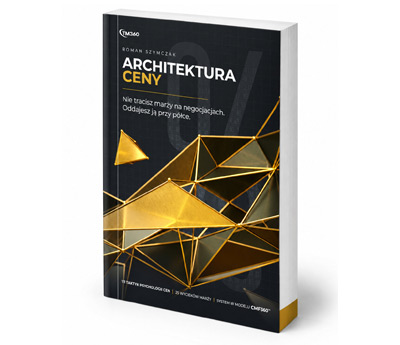
Roman Szymczak

Pricing architecture and price psychology tactics

Pricing 2.0 is about designing logical decisions based on a well-thought-out pricing architecture. Customers must be able to see a clear structure of choice. Each product range within a category should be built not only on segmentation but also on the use of advanced pricing tactics and price psychology. In my consulting projects, I present over 100 different solutions combined with behavioral psychology, thanks to which the valuation of products on the shelf influences the speed of customers' purchasing decisions.

They shape:

  • value perception,
  • shopping cart structure,
  • shelf-level conversion,
  • brands share aligned with their selection strategies.

Price operates within the context of the shelf. Without integration with assortment strategies and merchandising assumptions, it doesn't exist.

my publications

Eliminating margin leaks

The most common reasons for the loss of profitability of a retail category are:

  • excessive price promotions,
  • lack of price psychology tactics,
  • incorrect ABC ranking,
  • lack of ROI control,
  • cannibalization of regular sales,
  • misalignment between pricing, category role and brand-choice strategy.

Implementing a systemic approach to pricing protects structural margin without compromising volume.

Business impact

In a convenience chain, streamlining the pricing strategy resulted in:

0
increase

in contract margin

0
reduction

of ineffective promotions

0
increase

in the average cart value.

Pricing stopped being a reaction. It has become a P&L control tool.

Quick Link

Contact Us

Roman Szymczak - TM360 Ltd

Aleja Jana Pawła II 27
00-867 Warsaw, Poland

TM360 Academy®

Contact

Name *
Company name *
Email Address *
Phone *
+48
Search

    Business Context

    Which best describes your business?

    Category Scope

    Which category do you want to improve?

    Main Challenge (VERY IMPORTANT)

    What is your biggest challenge today?

    Scale (kwalifikacja leada)

    Annual revenue (approx.):

    Markets

    Where do you operate?

    Name *
    Email Address *
    Company Name *
    Phone number *
    +48
    Search