
Shopper Behavior Research
From Perception to Purchase Decision
More than sales data
A modern category strategy can't rely solely on sales data and turnover reports. Data shows what was purchased. It doesn't reveal why the customer made that decision.
And in retail, the difference between "what" and "why" determines your margin.
That’s why shopper research is an integral part of designing category and pricing strategies. I don't treat it as a marketing element. I treat it as a profitability management tool.
Over the years of working in retail corporations and consulting projects, I've seen the same pattern many times: pricing and assortment decisions were made based on Excel sheets, without understanding how the customer interprets the shelf. The result?
Unintended cannibalization, too narrow price segments, poorly set price anchors, lack of price psychology tactics.
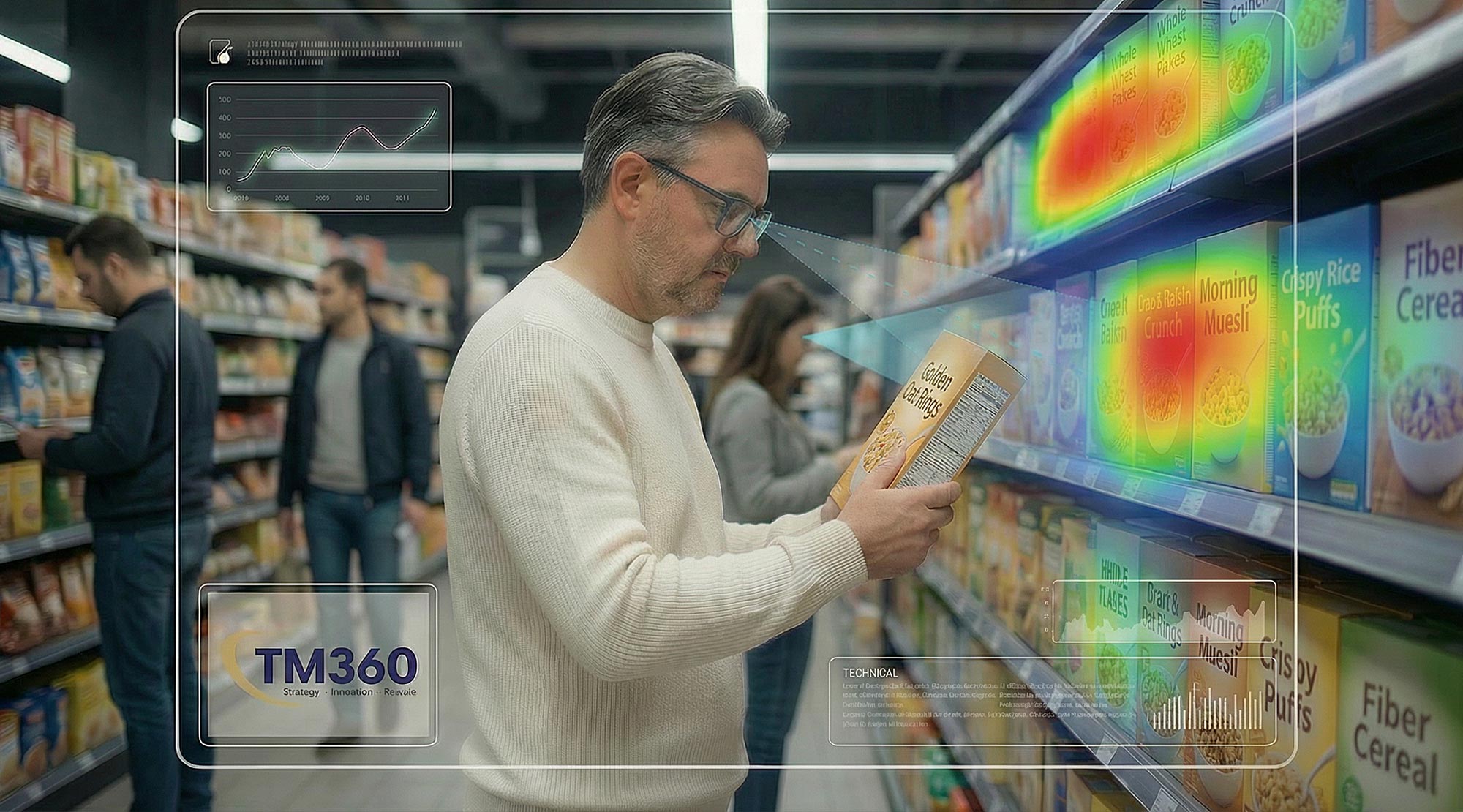
My proprietary shopper behavior research focuses on the real decision-making process at the shelf. I analyze:
• how customers perceive price differences between brands,
• how they compare products within a category,
• the role of private label as a price anchor,
• which price levels build trust and which raise suspicion,
• how the sequence of viewing and selecting a given product proceeds.
I'm not only interested in what the customer bought.
I'm interested in what happened in their mind during those 3-5 seconds in front of that product (data from NielsenIQ and Simporter).
This research is conducted within the context of a specific category, format and pricing architecture. This makes it not an abstract market report but a direct support for business decisions.
In practice, this means that research finding translate into:
- designing effective price ladders (entry – core – premium),
- defining logical price differences between segments,
- optimizing the display of margin-driving products,
- adjusting the position of private label within the category structure,
- eliminating conversion barriers resulting from visual chaos.
In many projects, price-perception studies reveal that customers don't read segmentation the way the sales team assumed. Sometimes the premium segment is invisible because price differences are too small. Sometimes the economy segment dominates visually and suppresses sales of margin rich products.
This is where shopper insight meets pricing strategy.
Researching shopper behavior also allows organizations to validate strategic assumptions before implementing large-scale changes. Instead of relying on intuition, organizations can test scenarios and understand their potential impact on conversion and margin structure.
As a result, pricing and merchandising are no longer discretionary.
They are designed based on shopper behavior.
Shopper research in the CMF360° model
In the CMF360° model, shopper research isn't a standalone project. It's part of a system that integrates:
- category strategy,
- pricing architecture,
- shelf layout,
- P&L economics.
This is a transition from sales analysis to designing the purchase decision.
Because category profitability doesn't begin in Excel.
It begins in the customer's head – seconds before they reach for the product.
Ready to Improve Your Category Performance?
Identify margin leakage, optimize pricing, and build a category strategy that works in real retail conditions.
Quick Link
Contact Us
Roman Szymczak - TM360 Ltd
Aleja Jana Pawła II 27
00-867 Warsaw, Poland