
Global Retail Benchmarking
International Best Practices Analysis
A broader context
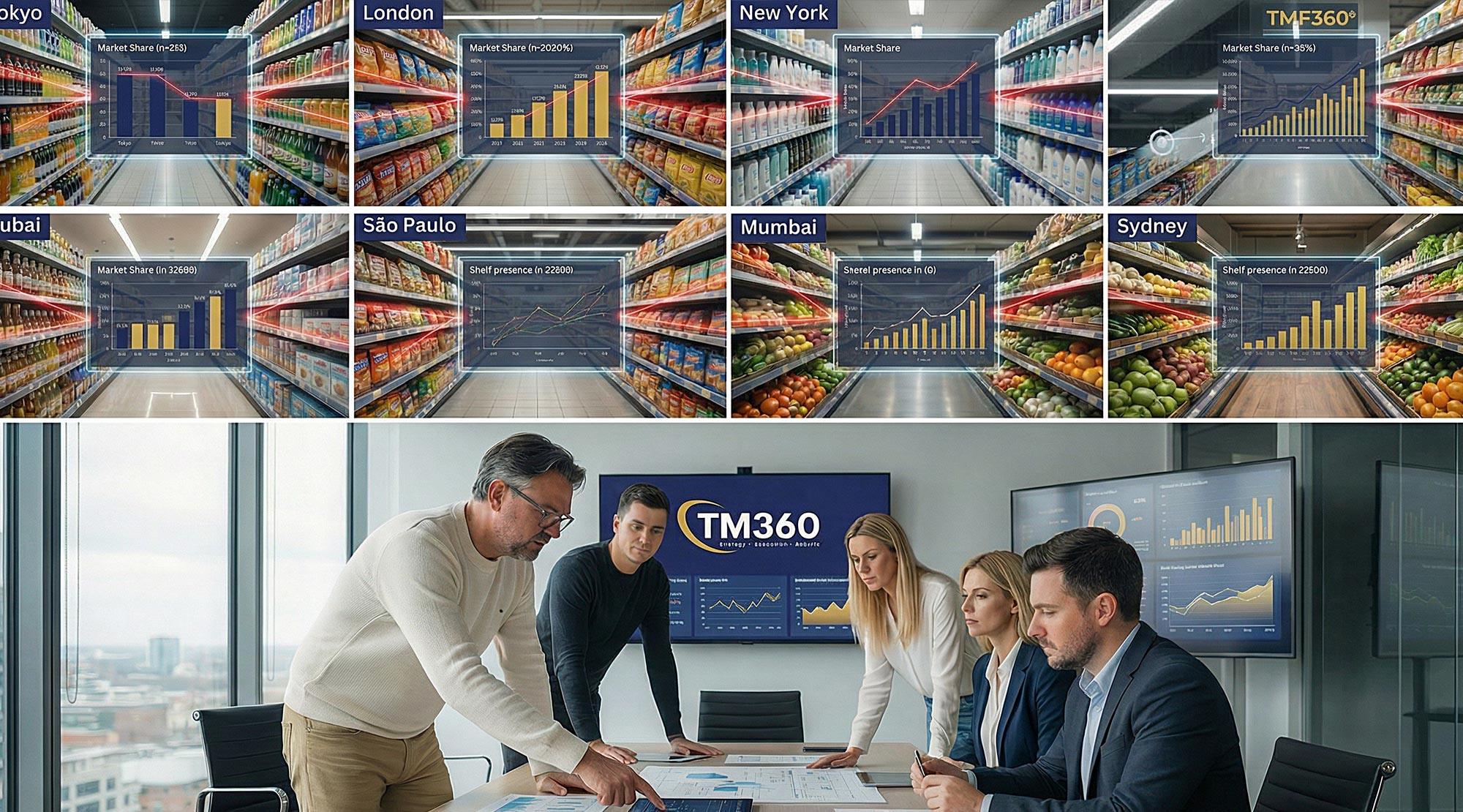
Retail is no longer a local market. Today's customer doesn't compare your store solely with nearby competitors – they benchmark their customer experience against the best formats and channels from around the world. Standards are shifting rapidly: what was an innovation in Western markets yesterday becomes a basic expectation for your customer tomorrow.
That's why I treat retail benchmarking as a strategic tool, not just a source of visual inspiration.
Analyzing profitability mechanisms
In my work I examine international best practices through the lens of their real impact on financial performance. I focus on key areas:
- Category structure and role management in P&L: How global leaders build assortments to optimize chain performance.
- Price positioning strategies and models: How to build competitive advantage without destructive price wars.
- Private-label development: Strategic approach to entry and premium segments as margin-building tools.
- Merchandising: Designing shopping paths and displays to maximize conversions.
- Modern operating models: Evaluating convenience and proximity formats in the context of process efficiency.
I don’t look for aesthetics, I’m after outcomes.
When analyzing foreign chains, I'm not just interested in what a given store looks like. I'm interested in why it generates a specific margin. I focus on concrete processes and scalable solutions:
- How do top players in the market construct price ladders to stimulate shopping cart value?
- How do they manage the premium segment without losing sales volume?
- How do they leverage private label to build structural profitability across the format?
- How effectively do they integrate analytics with real, shelf-level decisions?
Operational scalability
My experience in retail corporations has taught me one thing: solutions only work when they are operationally scalable. That’s why every benchmarking insight is filtered through the realities of:
- the organization’s cost structure,
- the level of decision centralization,
- the maturity of sales teams,
- the logistic and operating model,
- the organizational culture.
I do not copy solutions from foreign markets – I adapt their margin-generating mechanisms.
Repeatable retail patterns
Benchmarking makes it possible to identify repeatable patterns that increase shelf productivity and improve category profitability across a variety of business models – from discounters to supermarkets to convenience formats.
This macro perspective is one of the foundations of CMF360°. This model wasn't created based on a single market. It's a synthesis of operational experience, project work and observations of global retail standards.
Thanks to this, the designed strategies:
- are resistant to price pressure,
- take into account the development of private labels,
- integrate pricing and merchandising,
- are scalable across multi-store structures.
Global benchmarking isn't a trend review. It's a tool for designing competitive advantage.
Because in retail, those who copy innovations do not win.
The winner is the one who understands the mechanisms behind their profitability.
Ready to Improve Your Category Performance?
Identify margin leakage, optimize pricing, and build a category strategy that works in real retail conditions.
Quick Link
Contact Us
Roman Szymczak - TM360 Ltd
Aleja Jana Pawła II 27
00-867 Warsaw, Poland