
Beyond the Price Trap: How to Secure Shelf Space When the Buyer Says "No Room"

- Author Image:

You know the setting. Glass walls, a panoramic skyline, and a boardroom table polished to a mirror finish. On the other side sits the Buyer of a major international retail group—the person whose signature determines whether your next quarter accelerates or collapses.
You have spent months preparing. Your team refined the formula, tested the packaging, and perfected the logistics. Your presentation was flawless. Yet, the response is a calm, polite rejection: “I appreciate the quality. But our shelf isn’t elastic. We already have an economy offer, two strong mainstream brands, and a premium segment. I don’t see room for another SKU.”
In that split second, most Sales Directors make a fatal mistake. They revert to the "Commodity Trap." But there is a more powerful way to respond—one that shifts you from a product supplier to a Category Architect.
The Commodity Trap: A Race to the Bottom
When a Buyer closes the door, the instinct for many is to "buy" their way back in. You start offering additional retro-discounts. You propose deeper launch support. You negotiate against your own P&L.
While this feels tactical, it is actually a surrender. Every percentage point you concede now will haunt your margins for years. If you secure the listing this way, you enter a "hamster wheel":
- Pushing volume to compensate for low profitability.
- Running constant promotions to maintain shelf presence.
- Becoming dependent on short-term spikes to sustain production.
This isn't growth; it's margin erosion disguised as progress.
It Is Not a Price Problem—It Is a Positioning Problem
The challenge you face in that glass tower isn't about the invoice price; it’s about how your brand functions within the retailer's ecosystem.
Most categories are still managed under a simplified mental model: Economy, Mainstream, and Premium. While this looks organized in a spreadsheet, it is blind to the actual economic role each brand plays. Price segmentation organizes the shelf, but it does not optimize it.
This is where the Category Mastery Framework 360° (CMF360) changes the conversation.
CMF360: Shifting from SKU to Category Architecture
A category is not just a collection of products; it is an economic engine designed to deliver specific outcomes: traffic, rotation, margin, basket value, and differentiation.
Under the CMF360 framework, every brand must perform a defined strategic role, not just a price role. Instead of asking "Where do we fit?", you should be asking the Buyer: "Which strategic role in your category is currently underperforming—and how can we strengthen it together?"
Case Study: Turning Structural Weakness into Growth
We recently worked with a manufacturer entering a highly competitive FMCG category within a major European retail group. On the surface, the category looked healthy. Below the surface, profitability was bleeding.
Our analysis revealed:
- Over 65% of sales were driven by heavy promotions.
- The category was overexposed to price-sensitive shoppers.
- Private labels were cannibalizing mainstream brands rather than growing the category.
The Buyer’s initial response was predictable: "We have coverage across all price tiers." They were right in terms of price, but wrong in terms of strategy.
Identifying the Shopper Personas
The breakthrough came when we stopped looking at price tags and started looking at Shopper Personas:
- The Price Seeker (58% of units): Promotion-driven, low loyalty. The entire shelf was currently built for her, leading to low net margins.
- The Functional Buyer (27% of sales, 34% of profit): Analytical, looking for specific attributes, and less driven by discounts. The shelf did not speak to her clearly.
- The Aspirational Buyer: High basket value, seeking uniqueness and premium cues.
Our client’s brand wasn't designed to fight for the Price Seeker. We positioned it as a Margin Generator for the Functional segment. By speaking the language of finance rather than just marketing, we changed the nature of the negotiation.
Measurable Results: Leadership Over Listings
Six months after the strategic pivot, the results were clear:
- Average basket value increased by 7.8%.
- Gross margin improved by 3.2 percentage points.
- Non-promotional sales rose from 42% to 56%.
The manufacturer entered the market without destroying their margin, and the retailer gained a structurally healthier category.
Conclusion: Enter as an Architect, Not a Commodity
If you are still negotiating primarily on price, you are negotiating from a position of weakness. The shelf is rarely "full"—it is usually just misallocated.
The next time a Buyer tells you there is no space, don't reach for a discount. Pause. Ask about the strategic gaps in their category architecture. Leadership is what separates Sales Directors who chase listings from those who shape categories.
Are you ready to redesign your category strategy?
If your brand is stuck in the "Commodity Trap," let’s talk. Our model CMF360 helps you move beyond price wars and secure your place on the shelf as a high-margin strategic partner.
Contact our expert team today to schedule a strategy audit.
You May Also Like
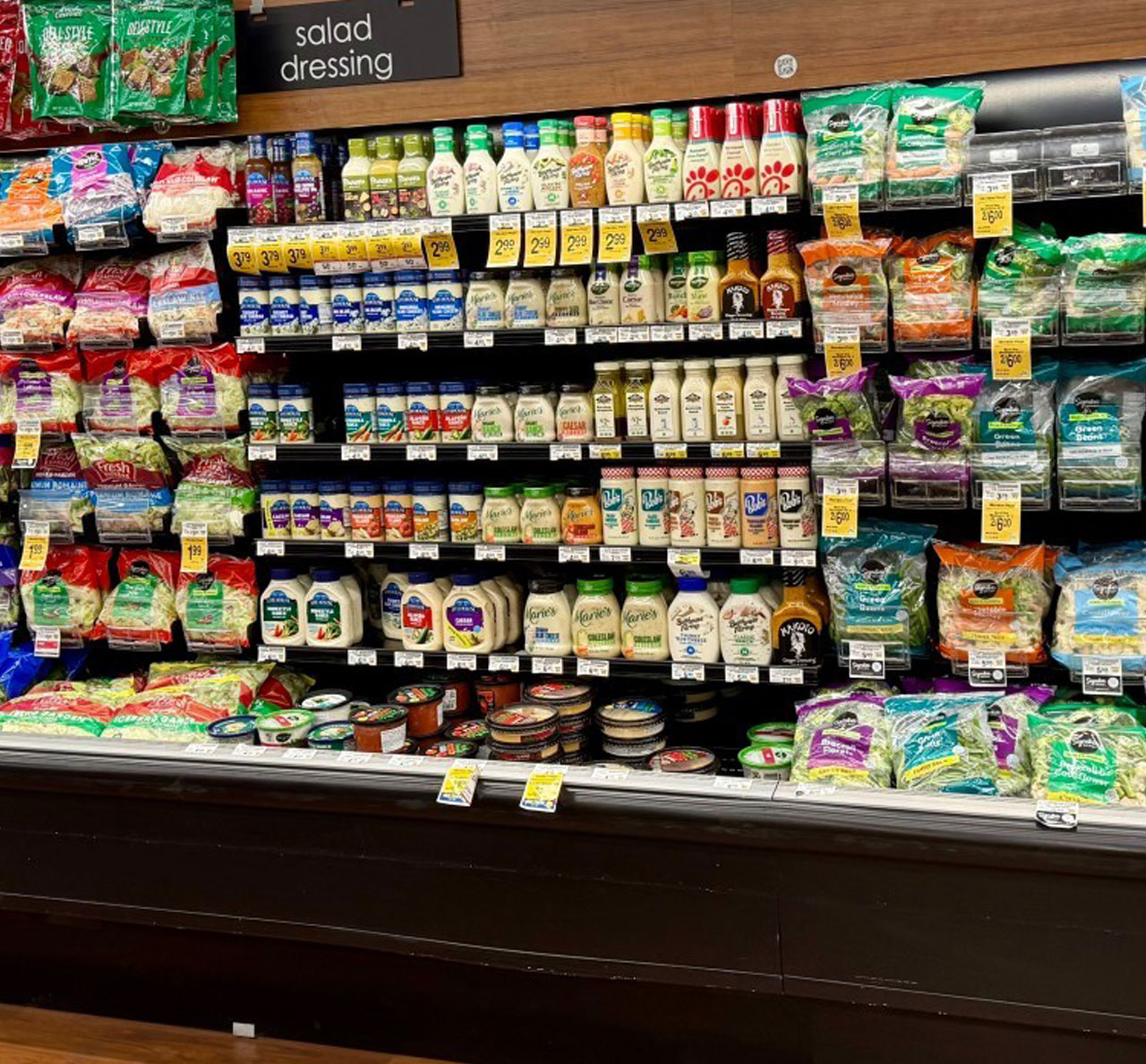
It started as a quick lunch run. But standing in front of the "Salad Dressing" section, I realized I wasn’t just looking at an aisle—I was witnessing a perfectly orchestrated sales symphony. From the lettuce mixes to the toppings and dressings, every element was aligned to simplify the journey and maximize category value.

In the age of AI dashboards and real-time POS analytics, it is easy to fall into the "Data Trap." We measure turnover, penetration, and margin with surgical precision. We track price elasticity and brand share across thousands of stores. But behind every data point is a human being with a story, a motive, and a specific set of barriers.
Quick Link
Contact Us
Roman Szymczak - TM360 Ltd
Aleja Jana Pawła II 27
00-867 Warsaw, Poland