
The Art of Complementarity: Why Strategic Category Architecture Beats Random Merchandising
- Author Image:

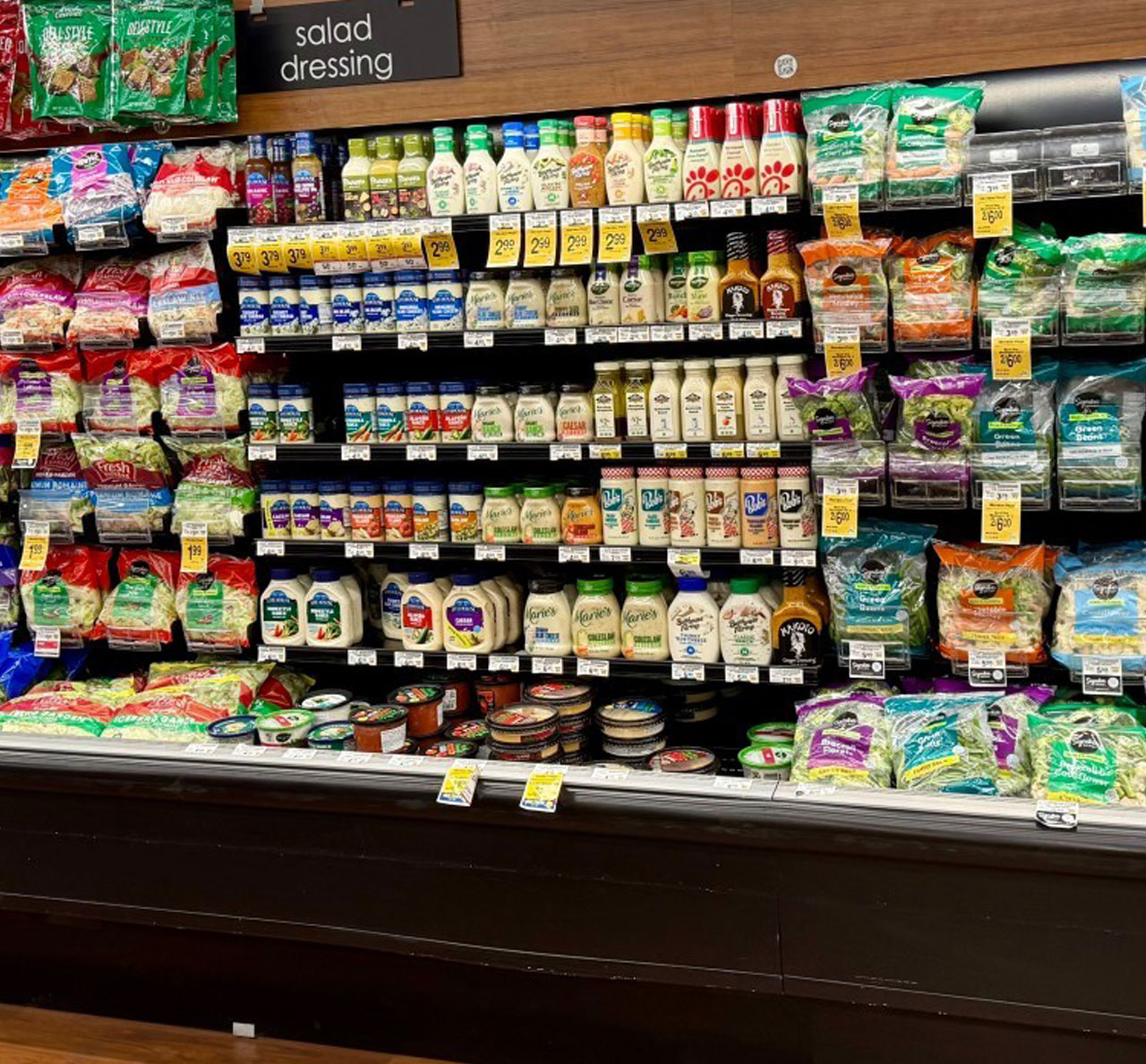
It started as a quick lunch run. But standing in front of the "Salad Dressing" section, I realized I wasn’t just looking at an aisle—I was witnessing a perfectly orchestrated sales symphony. From the lettuce mixes to the toppings and dressings, every element was aligned to simplify the journey and maximize category value.
This is Complementarity in action. Within the Category Mastery Framework 360° (CMF 360°), this principle is the ultimate engine for growth. It moves the conversation away from individual SKUs and toward a "Synergy of Profitability" that benefits both the retailer and the manufacturer.
1. Contextual Selling: From Category Silos to Shopper Stories
Traditionally, retailers think in silos: "lettuce goes here, dressings go there." Strategic complementarity breaks these walls. Instead of managing categories, you manage the consumption context—in this case, "making a salad."
In the CMF 360° model, different categories stop competing for attention and start collaborating for the basket.
The Result: The shopper who comes for salad automatically considers the dressing. The shopper who sees the dressing remembers they need the greens.
The Strategic Shift: You aren't selling a commodity; you are providing a solution.
2. Inner-Category Synergy: The Three-Tier Architecture
A high-performing shelf isn't built on random adjacencies. It requires a clear hierarchy where products guide the shopper step-by-step through different psychological triggers:
The Traffic Driver: Affordable, high-rotation salad mixes (Satisfies the need for Health).
The Basket Builder: Premium dressings with strong margins and unique flavors (Satisfies the need for Taste).
The Margin Enhancer: Complete salad kits combining all elements in one bag (Satisfies the need for Convenience).
By aligning these three levels, the Buyer ensures that the shelf isn't just full—it’s optimized for maximum transaction value.
3. Designing for Personas, Not Just Products
There is no "average" salad shopper. A truly complementary shelf must speak to at least three distinct Shopper Personas simultaneously:
The Fit Seeker: Values organic labels and "zero" dressings. She seeks logic and quality over price.
The Impulsive Buyer: Looking for an immediate meal solution. He reacts to color-coding and "within-reach" convenience.
The Family Planner: Focuses on value-sized packs and routine staples. She values organization and efficiency.
Smart complementarity ensures that each of these filters finds its "why" within five seconds of approaching the shelf.
4. The ROI of Strategic Alignment: Numbers Don't Lie
In our consulting projects, replacing linear planograms with a complementarity-based architecture typically yields measurable financial gains:
+15–25% increase in basket value.
+10–20% uplift in premium, high-margin SKUs.
30% faster decision-making, reducing shopper frustration and "choice paralysis."
5. A Shared Language Between Manufacturer and Buyer
True complementarity requires the manufacturer and the Buyer to move beyond negotiating discounts and start co-designing value. When manufacturers share shopper insights (e.g., "Which dressings are most often paired with specific greens?") and retailers share POS data, they can create:
Complementary Planograms that reduce friction.
Basket-Building Promotions (e.g., "Buy the mix, get the dressing at a special rate").
Unified Communication that reinforces the solution-based approach.
Summary: Lessons for Category Managers
To transform your shelf into a growth engine, keep these five principles in mind:
Build scenarios, not shelves: Focus on the consumption context.
Measure synergy: Track how the sales of one item drive the success of another.
Design for personas: Ensure every shopper type finds their "fit" instantly.
Collaborate on data: Use shared insights to align margin goals with shopper needs.
Think ecosystem: Manage the whole category, not just the fragments.
Master the Synergy of Profitability
Strategic complementarity is just one pillar of a modern retail strategy. If you want to dive deeper into pricing ladders, shopper personas, and the collaborative profit engine between retailers and manufacturers, explore the full framework in my book:
"Synergy of Profitability: Category Management as Shared Value Between Retailer and Manufacturer"
Visit www.tm360.pl to get your copy and start turning your categories into a collaborative profit engine.
You May Also Like

You know the setting. Glass walls, a panoramic skyline, and a boardroom table polished to a mirror finish. On the other side sits the Buyer of a major international retail group—the person whose signature determines whether your next quarter accelerates or collapses.

In the age of AI dashboards and real-time POS analytics, it is easy to fall into the "Data Trap." We measure turnover, penetration, and margin with surgical precision. We track price elasticity and brand share across thousands of stores. But behind every data point is a human being with a story, a motive, and a specific set of barriers.
Quick Link
Contact Us
Roman Szymczak - TM360 Ltd
Aleja Jana Pawła II 27
00-867 Warsaw, Poland